

You influence without authority when you move people who do not report to you, and you do it by earning their trust, understanding what they value and offering something in return. A title cannot do this for you. Credibility, listening, a fair exchange and a few well-chosen allies can. Below are the method, the places it breaks down, and the ethical line a leader should hold.
We write as the Illuminati, an organization that counsels its members in ethical leadership, critical thinking and political engagement. We hold that real leadership has always rested on character before rank.
TL;DR
- Formal authority is rarely enough. Most leaders must eventually mobilize people who are not their direct reports, so influence has to be earned, not assumed.
- Treat the other person as a potential ally. Learn their pressures, goals and resources, then look for an exchange that serves you both.
- Credibility comes from competence, reliability and honesty about your own interests. Listening is the fastest way to build it.
- Pushing harder usually produces resistance. Approach key people gently, and leave them free to say no.
- If nothing works, check whether the person you are persuading is able to say yes at all. Some problems need a different person, not a better argument.
Table of Contents
- What influence without authority means
- The foundation: reciprocity and the ally mindset
- Build credibility before you ask
- Listen first, and mean it
- Approach people so that they remain free to say yes
- What the popular “rules” say
- Why trust and character matter more than tactics
- When your influence is not working
- A seven-day plan to start
- How we approach it
- FAQ
- Sources
What influence without authority means
Authority is the right to direct others’ work: to assign tasks, approve budgets, decide. Influence is the ability to change what someone thinks or does without that right. You need influence whenever your work depends on people outside your chain of command: colleagues in other departments, volunteers, board members, partners, neighbors in a community project.
Harvard Business Review’s 2026 guidance on the subject begins from a plain observation: most leaders eventually need to mobilize people who are not their direct reports, people who cannot weigh in on key decisions or control budgets. As modern organizations spread authority across many hands, the skill matters more, not less.
It also applies to people who do have rank. Steven DeMaio’s HBR article on the subject argues that its principles work in roles where authority is a given, whether you are a manager, a frontline worker or an independent contractor. A manager who relies on the title alone often finds that compliance is not commitment.
The foundation: reciprocity and the ally mindset
The most cited framework in this field is the Cohen-Bradford model. Their paper holds that influence without formal authority is acquired through the law of reciprocity: people tend to repay what they receive. For the exchange to work, the paper says the influencer must do four things:
- Think of the person to be influenced as a potential ally, not an adversary.
- Know that person’s world, including their pressures, needs and goals.
- Be aware of the key goals and resources the person values.
- Understand the exchange itself, so that both sides come away ahead.
The word “exchange” can sound transactional. In practice it is often modest: a piece of expertise, an introduction, credit given in public, help with a deadline, a problem solved on their behalf. What matters is that it is something the other person actually values, not something you assume they should.
A worked example. You lead a community fundraising drive and need a local business owner, who owes you nothing, to host an event. A weak approach explains why the cause is worthy. A stronger one starts with a conversation about the owner’s quieter season, their wish to be known by younger customers and their worries about staffing. You then propose an event on a slow weekday, staffed by your volunteers, with the owner’s name on the invitation. You have asked for a venue and offered visibility and help. The owner can see the trade is fair.
Build credibility before you ask
People grant influence to those they believe. The University of Kansas Community Tool Box explains that credibility grows when people have reason to see you as competent, accurate, reliable and honest about your interests. Its practical suggestions are plain and effective:
- Use reliable evidence for your claims.
- Correct your mistakes openly.
- Follow through on what you promise.
- Disclose any conflict of interest before someone else discovers it.
The last point deserves emphasis. A hidden agenda, once found, ends influence for good. Saying openly what you stand to gain, and what you hope the other person gains, removes suspicion before it forms.
Small commitments kept build the account on which larger requests draw. Deliver the short report on the day you said you would. Return the call. Credit the colleague whose idea you are building on. These habits are unglamorous, and they are the reason some people are heard in rooms where they hold no office.
Listen first, and mean it
Listening is the most dependable way to learn what another person values, which is the second and third step of the Cohen-Bradford model. The Community Tool Box adds that listening with real openness to changing your mind can reveal what matters to others, what risks they see and what constraints they work under. It may lead to a compromise, or show you that your own proposal should change.
There is evidence on how much it counts for trust. In a Deloitte survey of more than 25,000 professionals, the most common answer to the question of what one thing someone can do to build trust was to listen. Respondents stressed listening to understand rather than to respond, repeating back what was said, asking follow-up questions and considering what they had heard before deciding.
A simple routine follows from this:
- Ask what the person is trying to achieve this quarter, and what stands in the way.
- Repeat their answer in your own words and ask whether you have it right.
- Ask one follow-up question about the risk they worry about most.
- Only then describe your proposal, framed in terms of their goals.
Approach people so that they remain free to say yes
A leader without authority often feels the pull to push harder when resistance appears. The research points the other way. HBR’s August 2026 tip, adapted from Pamela Meyer’s work, says that pushing harder creates resistance, so effective influence is indirect. Its first strategy is to identify who has real influence in the organization, not to rely on a title.
In an HBR podcast, Meyer explains that pressure threatens a person’s sense of autonomy and triggers what psychologists call reactance, the urge to pull back and do the opposite. She describes “influence spotters” who research who actually influences hard decisions, trace who influences those influencers, and approach key people gently and optionally.
This suggests a few habits:
- Map the real network. Ask who is consulted before a decision is made, and who is consulted by those people.
- Offer, do not demand. “Would it help if I drafted the first version?” leaves the choice with them. “You need to approve this” does not.
- Ask for a specific action. MIT’s communication lab, writing about how to approach policymakers, advises emphasizing shared goals and asking for one specific action. A vague appeal gives the listener nothing to say yes to.
- Lead with shared values and a human story. The same guidance recommends linking your message to the other party’s priorities and being honest about challenges and downsides, not leaning on data alone.
What the popular “rules” say
Many readers arrive at this topic through a book on the subject by Keith Ferrazzi, which sets out eight rules of co-elevation. Summaries of the book describe rule 3 as earning permission to lead by serving and caring for others first, and rule 4 as making collaboration the normal way of working, not a last resort. The two rules agree with the older reciprocity model: give first, build the relationship before you need it and lead by invitation.
Why trust and character matter more than tactics
Techniques can be learned in an afternoon. What makes them work for years is the person using them. We hold that influence without authority is a test of character: the same methods that win cooperation honestly can be turned to manipulation, and people eventually sense the difference.
Three boundaries keep the practice sound:
- Be transparent about your purpose. Say what you want and why.
- Use side conversations sparingly. Meyer advises that a private channel should be temporary: open one to unlock a frozen decision, then close it and bring the final decision into the open. A permanent backchannel makes you look like someone seeking power.
- Seek the other person’s benefit, not only your own. An exchange that leaves one side worse off is not reciprocity, and it will not be repeated.
This is the principle our members study: that influence, like wealth, should serve the advancement of others and not only of oneself. It is the heart of our teaching on ethical leadership and our beliefs.
When your influence is not working
Sometimes a well-built case still fails. Before you try another tactic, diagnose the situation. Practitioners who write on this subject suggest a short set of questions, which we adapt here:
- Can this person say yes? If they lack the authority, find the person who has it, or reframe your request so that it falls within their power.
- Do they have the authority but lack the motivation? Return to listening. Build the case in terms of their interests, not yours.
- Is this a structural conflict? If two legitimate interests can only be reconciled by someone senior, escalating to that person is a fair and honest step, not a failure.
- Is the timing wrong? A request made during a crisis or a budget freeze may succeed a month later.
- Must the message come from you? Someone with a stronger relationship to the person may carry it better.
- Is there a smaller, related issue you can win first? An early success builds the trust a larger request needs.
These questions come from practitioners, including Doron Katz and B. Kim Barnes, who treat them as a diagnosis to run before more persuasion. Barnes also suggests treating a difficult person as a teacher: afterward, review how much you learned beforehand, how curious and patient you were, and when you were prepared to withdraw gracefully.
Knowing when to withdraw is itself a mark of leadership. Persistence spent on a person who cannot decide costs you the goodwill you need elsewhere.
A seven-day plan to start
You do not need a program to begin. One week is enough to change how you work with people outside your reporting line.
- Day 1. Name one outcome you need that depends on people who do not report to you.
- Day 2. List the five people who can help or block it, and write down what each one is trying to achieve.
- Day 3. Ask who those five themselves listen to. Add those names.
- Day 4. Hold one listening conversation. Do not make a request.
- Day 5. Do one thing of real value for someone on your list, with no strings attached.
- Day 6. Return to your proposal and rewrite it around their goals, with one specific request.
- Day 7. Make the request, plainly and openly, and leave the person free to answer.
How we approach it
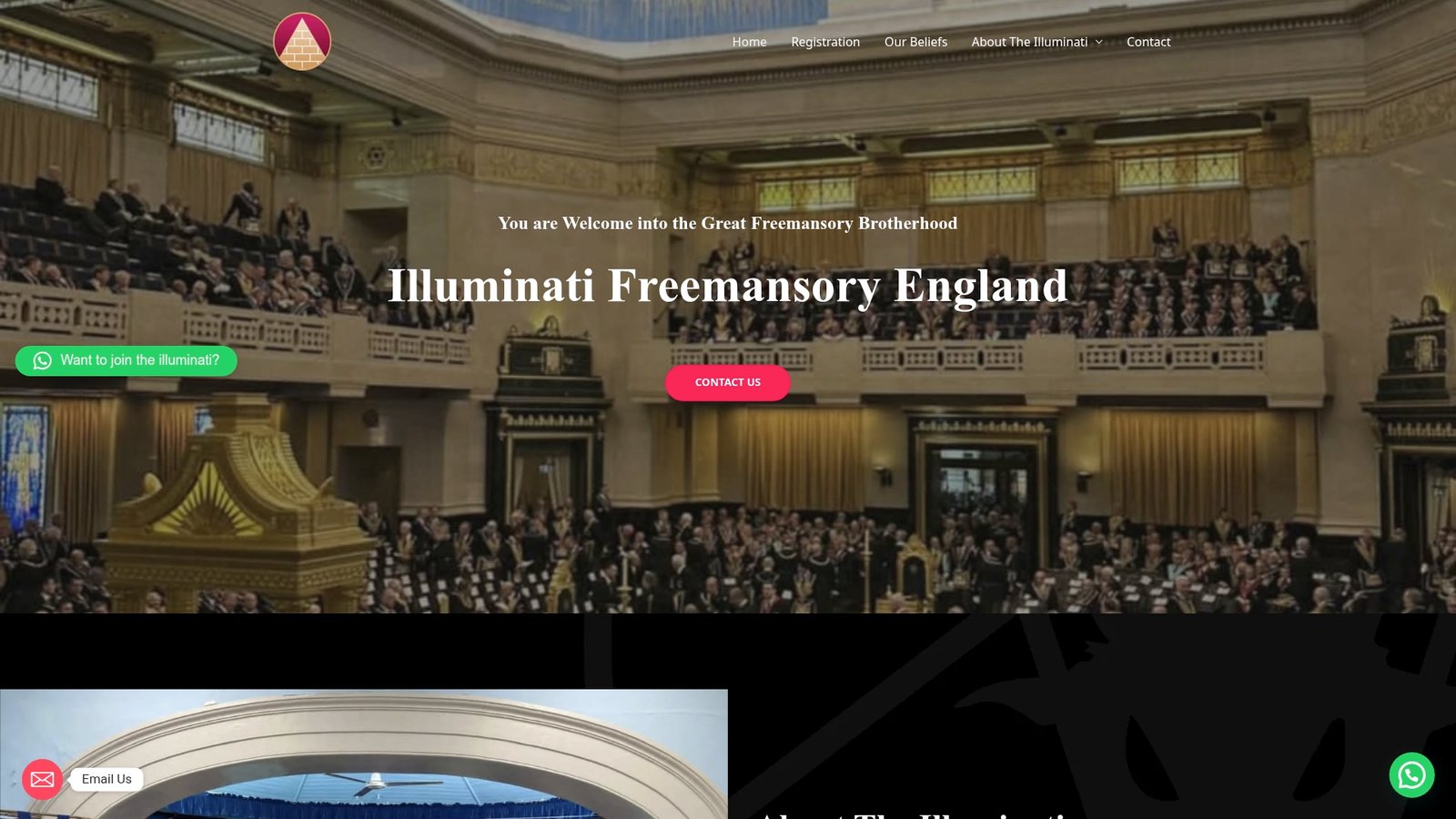
We, the Illuminati Brotherhood, regard this discipline as part of the education we offer. Our members receive guidance and support in ethical leadership, critical thinking, political engagement and community involvement, along with mentoring and access to networking events. Our purpose is to bring together people of good will in solidarity, whatever their differences and backgrounds, and to help both men and women become better members of society. Our main goal is love, unity and freedom, and we stand for the freedom of happiness and satisfaction. We also hold that people who work together with integrity can realize their dreams faster.
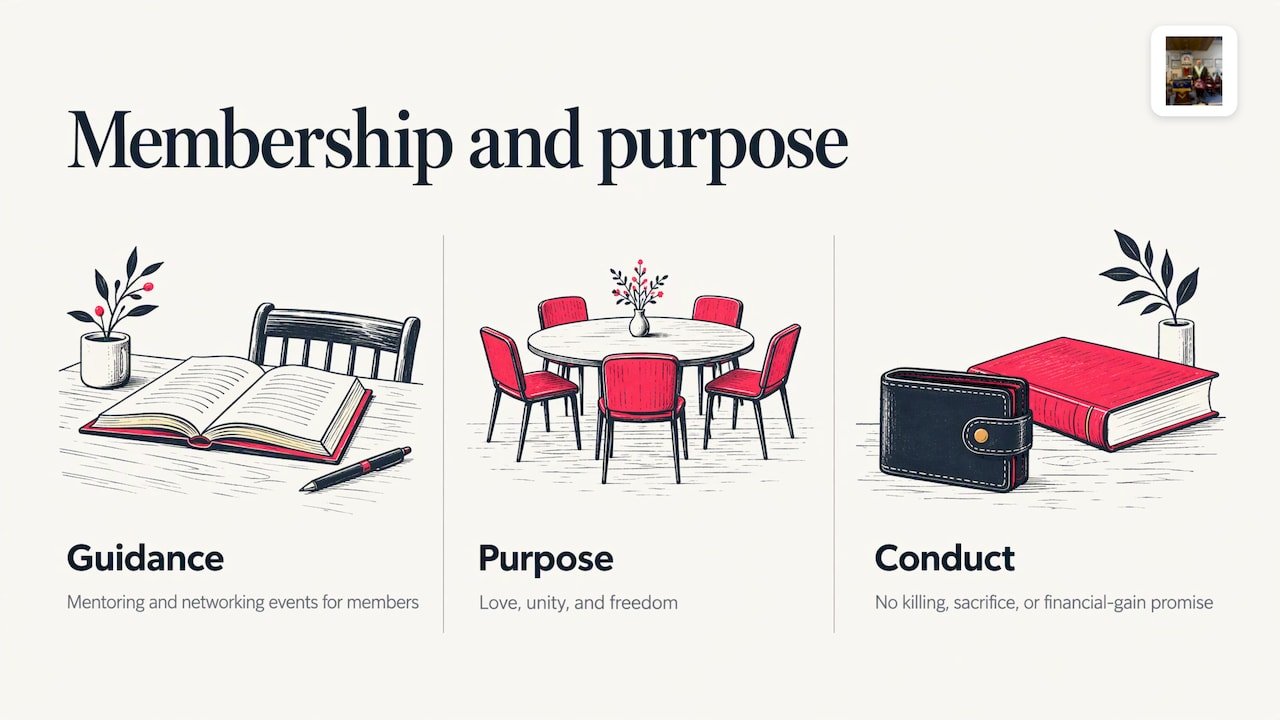
We state plainly that the Illuminati does not practice human killing or sacrifice. We caution anyone who meets claims to the contrary: fake agents impersonate the organization and spread false claims about it. Our work is education and conduct, and our membership makes no promise of wealth or financial gain.
If you wish to learn who we are, you may read about the Illuminati and our purpose. Those who wish to take part may apply through our membership registration.
For entrepreneurs who want to pair influence with sound money habits, our article on financial literacy for entrepreneurs sets out the skills that matter. Our reflection on the pendulum of power takes up how power shifts and what it asks of those who hold it.
FAQ
How do you influence people without authority?
Start by treating them as potential allies and learning what they need, fear and value. Build credibility through reliable follow-through, listen before you ask, and offer something of real worth in exchange. Then make one specific request and leave them free to decline.
What is the difference between authority and influence?
Authority is a formal right to direct work, granted by a position. Influence is the ability to change what people think or do without that right. A leader can hold either, both or neither, and influence tends to last longer because it rests on trust.
What should you do when people resist?
Stop pushing, because pressure tends to trigger resistance. Check whether the person has both the authority and the motivation to agree. If not, reframe the request, find the right decision-maker, or choose a smaller issue to win first.
Is influencing without authority a form of manipulation?
Not when it is done openly. Manipulation hides purpose or serves only one side. Honest influence states its aim, discloses conflicts, offers a fair exchange and accepts a refusal.
Sources
- 5 Ways to Wield Influence When You Lack Authority, HBR
- Leading When You Don’t Have Formal Authority, HBR
- Influence Without Authority, Cohen and Bradford, Stanford
- Influencing People, University of Kansas Community Tool Box
- Build Trust With Your Ears, Deloitte US
- Wielding Influence When You Lack Authority, HBR
- How People Without Formal Power Gain Influence, HBR podcast
- Communicating with Policy Makers, MIT AeroAstro Communication Lab
- Book summary: Leading Without Authority
- How People Without Formal Power Gain Influence
- Influence Without Authority Is Half the Advice, Doron Katz
- When Influence Fails, B. Kim Barnes