

Community leadership is the work of guiding a group of people toward a shared good, and doing it with them rather than above them. Research on the subject points to one conclusion: the leaders who last are those who move from “I” to “I and we,” build trust, share power and keep learning. We hold the same view. Our Brotherhood exists to form men and women of good will into leaders of that kind, and this guide sets out what the work involves, what it demands of you and where you can begin.
TL;DR
-
Community leadership is a shared effort for the greater good, not the authority of one person over many.
-
The core skills are assessing your environment, creating clarity, building trust, sharing power, developing people and honest self-reflection.
-
A leader’s effectiveness rests on reputation: be transparent and own your mistakes.
-
Local leadership programs typically run for months and combine learning, mentors and a project that serves a real need.
-
Our work is built on love, unity and freedom, and we welcome people of good will to apply through our membership page.
Table of Contents
What community leadership means
A community can be a neighborhood, a town, a profession, a congregation or a circle of friends with a common cause. Community leadership is the guidance of such a group: setting a direction, shaping its culture and organizing what it does together.
Two forms are worth distinguishing. A widely cited intergenerational leadership report defines individual leadership as a process in which one person influences a group toward a common goal while respecting the group’s freedom. It defines collective leadership as a diverse group working in partnership to make a difference, with answers emerging from the wisdom of the whole group. The same report argues that effective twenty-first-century leadership is collective and that leaders must widen their view from “I” to both “I” and “We.”

This is a recent idea in formal study. A 2017 article in the Journal of Leadership Education treats community leadership as a distinct context and proposes a model of 20 areas grouped under five broad factors. The authors did so because earlier leadership theories were largely indifferent to context. In plain terms: leading a volunteer committee or a neighborhood is not the same as running a company, and it needs its own skills.
What a “leadership community” is
People also use the phrase for a group of leaders who learn together. The idea is old and simple: a leader grows faster among peers who hold them to a standard than alone. Many local programs and, in our own case, a brotherhood of members are built on exactly this principle.
What a community leader is responsible for
There is no single legal job description, but the responsibilities that recur in the research and in practice fall into six duties.
-
Setting direction. The leader helps the group agree on where it is going. A 2026 systematic review in SAGE Open finds that effective community leadership is marked by strategic collaboration, participatory decision-making and visionary guidance.
-
Opening decisions to the people affected. Missouri Extension’s community development guide holds that people have the right to take part in decisions affecting their well-being, and that participation in public decision-making should be free and open.
-
Protecting dignity. The same guide begins from the principle that all people have basic dignity. A leader who forgets this loses the community’s trust quickly.
-
Building trust through transparency. The University of Minnesota’s community leadership advice is that a leader is only as powerful as their reputation, so leaders should act transparently and take responsibility for their mistakes.
-
Developing other people. A leader who cannot be replaced has not finished the work. Part of the task is to prepare the next leaders.
-
Bridging divides. Community leaders must cross boundaries between individuals, groups and organizations, and heal old rifts, according to the intergenerational leadership report.
Notice what is missing from the list: control. The duties are about service, and the person who treats a community as a possession has misunderstood the role.
Skills that make a community leader effective
A 2024 study of Extension agents who facilitated a rural civic-engagement trial examined collaborative leadership skills. It found them associated with more effective and sustainable community health improvement. The skills named were:
-
assessing the environment,
-
creating clarity,
-
building trust,
-
sharing power and influence,
-
developing people,
-
self-reflection.
-
wealth to all new member
Most agents in the study scored excellent in assessing the environment, sharing power and developing people. These are practical habits, and each can be trained.
Listening and conflict
Disagreement is not a sign that leadership has failed. Writing in Forbes, Cynthia Knapek observes that a vital part of community leadership programs is teaching conflict resolution and deep listening, so that disagreements become chances to learn and to find common ground. A leader who can hold a difficult conversation without winning it is worth more than one who is merely persuasive.
Courage and self-examination
The harder skills are inward. A 2019 study of 24 community coalitions in the Robert Wood Johnson Foundation’s SCALE initiative found that advancing equity requires self-reflection and courage, new ways of being in relationship, learning from failure and productive conflict that openly addresses power and oppression. The report echoes the older point that a leader must know their own values and be willing to unlearn and relearn.
Influence without a title
Most community leaders hold no formal authority. They cannot order anyone to do anything, so they lead through credibility, clear speech and shared purpose. We have written a practical guide on this subject: influence without authority sets out how a leader earns a following when no one is obliged to follow.
The ethical foundation
Power in a community is borrowed from the people who grant it. The 2026 SAGE Open review links community leadership to social capital theory: leadership works by strengthening trust, reciprocity and shared identity. A leader who spends that trust for private gain empties the very account from which the community draws strength.
This is why we teach that wealth and influence exist to serve the advancement of humanity, not individual enrichment. It is a principle, not a slogan: it shapes how we speak of money, of office and of obligation. Our statement of beliefs sets out the tenets in full.
How community leadership programs work
Many readers arrive at this subject looking for training. The model is well established. According to Forbes, community leadership programs began appearing in cities across the country in the 1980s. They were traditionally classes of diverse participants who met over several months to understand local issues and apply leadership skills for the community’s benefit. Over four decades, many have grown into larger organizations with multiple learning opportunities.
One example of the format: the New Leaders Council trains about 1,000 fellows a year, as reported by Stet News in 2025. Fellows attend a two-day weekend session each month for six months, are matched with mentors and design a capstone project addressing a social need.
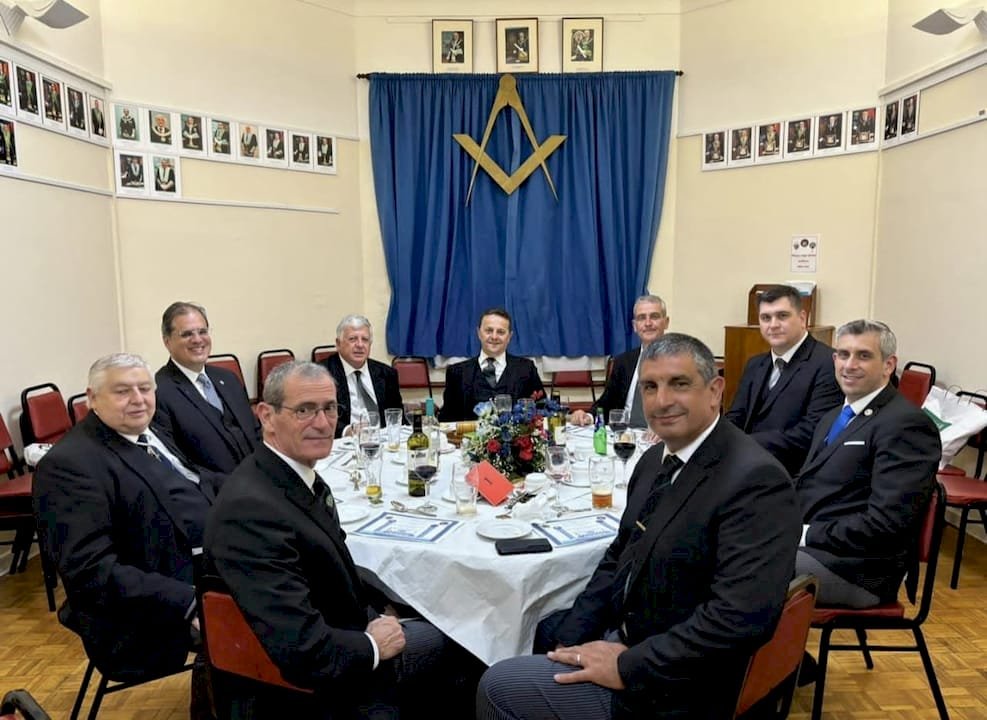
What do participants take from such programs? A 2024 qualitative study in Community Development interviewed 33 participants and 8 facilitators across two Midwest neighborhood programs. It found that participants were motivated by a need to help others, and that equitable, well-resourced communities require lasting local investment in hands-on, relational leadership training.
A sound program has four parts
| Element | What it gives you |
|---|---|
| Cohort of diverse peers | Exposure to views unlike your own |
| Local issue study | Knowledge of the real needs around you |
| Mentor | A guide who has carried the same weight |
| Capstone project | Proof that learning becomes action |
When you judge any program, ask whether it contains all four. Reading alone does not make a leader; practice among others does.
A practical path to begin
You do not need a title to start. These steps apply to a neighborhood, a business or a cause.
-
Map the community. Write down who lives and works in it, who holds influence, who is unheard and what already works. This is the skill of assessing the environment.
-
Listen before proposing. Hold ten conversations with people who disagree with you. Record what they want, not what they say about you.
-
Name a shared aim. Make it small enough to finish within a year and clear enough that a stranger could repeat it.
-
Share the work. Give each person a task that uses their strength, and credit them in public.
-
Report openly. Tell the group what succeeded and what failed. Transparency is how reputation is built.
-
Train a successor. Within the first year, choose someone to learn each of your duties.
-
Review yourself. Once a quarter, ask what you would do differently and who you may have wronged.
Financial discipline belongs here as well. A leader who runs a cause, a firm or a fund must manage money honestly, and our guide to financial literacy for entrepreneurs covers the skills that matter. Leaders also tire: our piece on executive burnout addresses signs, recovery and prevention, because a depleted leader serves no one.
Leadership as togetherness
Good community leadership brings together people of good will in solidarity, whatever their differences and backgrounds. We hold that both men and women must grow in character and ability so that society as a whole becomes better. A community that draws on only part of its people is working with half its strength.
This is the spirit behind our organization. Our main goal is love, unity and freedom. We stand for the freedom of happiness and satisfaction, and we desire to help our members realize their dreams faster, with guidance in personal growth, financial advancement, political engagement and ethical leadership. You can read more in About The Illuminati and in our statement of purpose.
We state plainly what the Illuminati does not do. It does not practice human killing or sacrifice, and no member is ever asked to. Be aware also that fake agents impersonate the organization and spread false claims about it. Rely on our own website for what we teach and how to apply.
Joining us
Many readers who search for community leadership are also asking how to join the Illuminati in the United States, or how membership compares with joining Freemasonry. Freemasonry is a separate institution with its own lodges and procedures. The Illuminati’s membership is the one we offer, and it is open to people of good will who seek growth and wish to serve.
Membership provides guidance and support in personal growth, financial advancement, ethical leadership and community involvement, together with mentoring and access to elite networking events. Members receive education in critical thinking, political engagement and moral conduct, and symbolic items such as talismans. No price is published for membership. You begin by registering.

If you recognize in yourself the wish to lead with integrity and to place your gifts at the service of others, apply for membership. The light is not kept for the few who hoard it; it is handed on to those prepared to carry it.
FAQ
What is community leadership?
It is the guidance of a group of people toward a common good, usually without formal authority. Researchers describe it as a collective effort in which answers emerge from the group’s shared wisdom, and the leader moves from “I” to “I and we.”
What are the responsibilities of a community leader?
A community leader sets direction with the group, opens decisions to those affected and protects every person’s dignity. They also build trust through transparency, develop other leaders and bridge divides between people and organizations.
What do community leadership programs involve?
Most combine a cohort of diverse participants, study of local issues, mentoring and a project that meets a real need. Many run for several months, with regular sessions such as one weekend a month.
Does the Illuminati practice human sacrifice?
No. The Illuminati does not practice human killing or sacrifice. Fake agents who impersonate the organization spread such false claims, so rely on our official website.
How do I start leading in my community?
Begin by listening to the people around you, then name one shared aim and share the work. Report results openly and train a successor. If you seek guidance and fellowship in this work, you may register on our membership page.
Sources
-
Community Leadership: A Theory-Based Model, Journal of Leadership Education
-
Revisiting the Concept, Practices, and Challenges of Community Leadership, SAGE Open
-
Leadership Characteristics of Extension Agents Facilitating Community Engagement, PMC
-
Using collaborative coalition processes to advance health equity, PMC
-
Creating spaces for dialogue and learning, Community Development